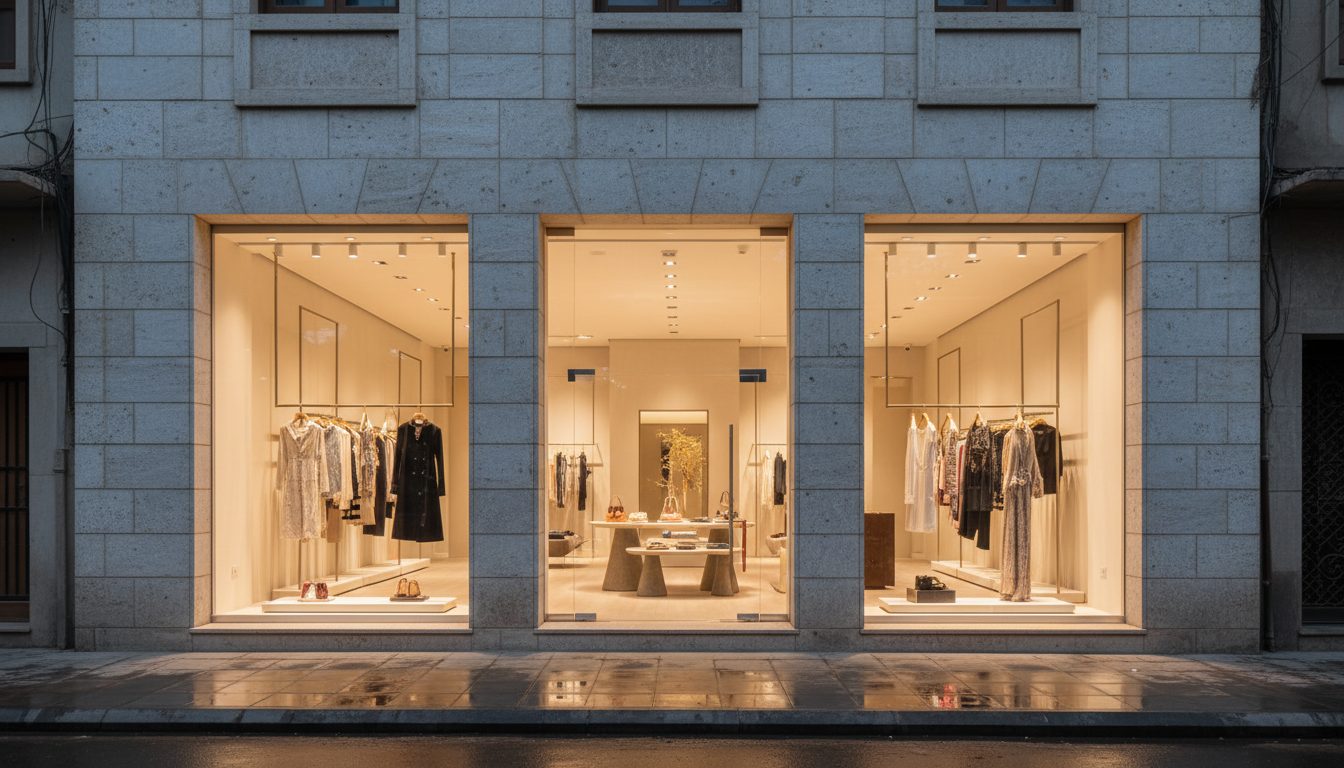
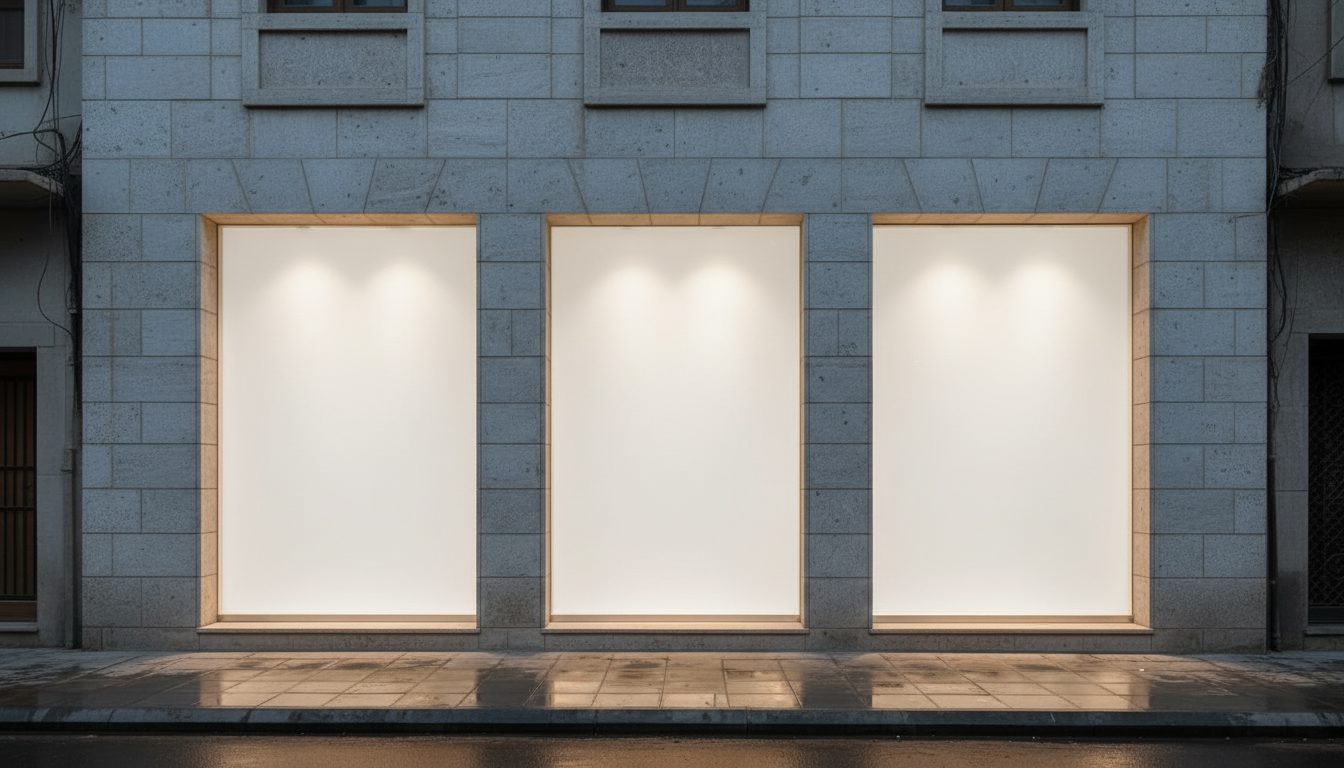
Storefront glass usually forces a choice: fully transparent, which works against you while you're restocking or mid-visual-merchandising, or permanently frosted or vinyl-wrapped, which kills window shopping the moment the shutter goes up. PDLC lets you control the reveal on your own schedule instead of picking one state forever — frosted while the display is being set, clear the instant you're ready to be seen, frosted again after close.
The after-hours play
This is where it gets genuinely useful for a high-footfall Indian high street or mall frontage: switch the film to frosted at closing and rear-project your latest campaign or promo reel straight onto the glass. Your storefront keeps selling after the shutter's down, without buying a separate digital signage screen. We've detailed exactly this for a boutique storefront in Delhi — frosted mystery through the morning, full display from opening bell, ad-mode projection after dark.
Glazing and control
Large storefront elevations almost always need multiple PDLC-laminated panels tiled across concealed mullions, since a single pane rarely spans the full frontage — factor lamination width limits (roughly 1.5–2m per panel) into your glazing layout early. Storefront glass is typically 10–12mm tempered for street-frontage safety, and we route the low-voltage wiring through the mullions to a small timer or BMS controller so the daily clear/frost/ad-mode schedule runs itself, with a manual app or remote override for staff.
What it replaces
PDLC retrofit film on existing storefront glazing costs a fraction of replacing panels with imported switchable smart-glass units — and you get the shatter-resistant safety-film benefit for free, which matters for any ground-floor frontage on a public street. It also replaces the vinyl wrap you'd otherwise reprint every campaign, and the blinds or curtains that visual merchandisers hate working around.
Storefront — Typical Spec
We usually recommend Ultra-Clear (91–92% transparency) for street-frontage glazing — display clarity is the whole point of the glass, and the extra clarity tier pays for itself in how the merchandise actually reads through it during clear hours.
Budget for panel count and control complexity, not just square footage — a frontage split into three independently switchable zones (say, entrance, main display and side panel) costs more in controllers but gives you the flexibility to run a partial reveal during setup instead of an all-or-nothing switch. At facade scale, per-sq-ft film cost also drops with order size, so a full mall frontage prices out better per panel than a single boutique window.