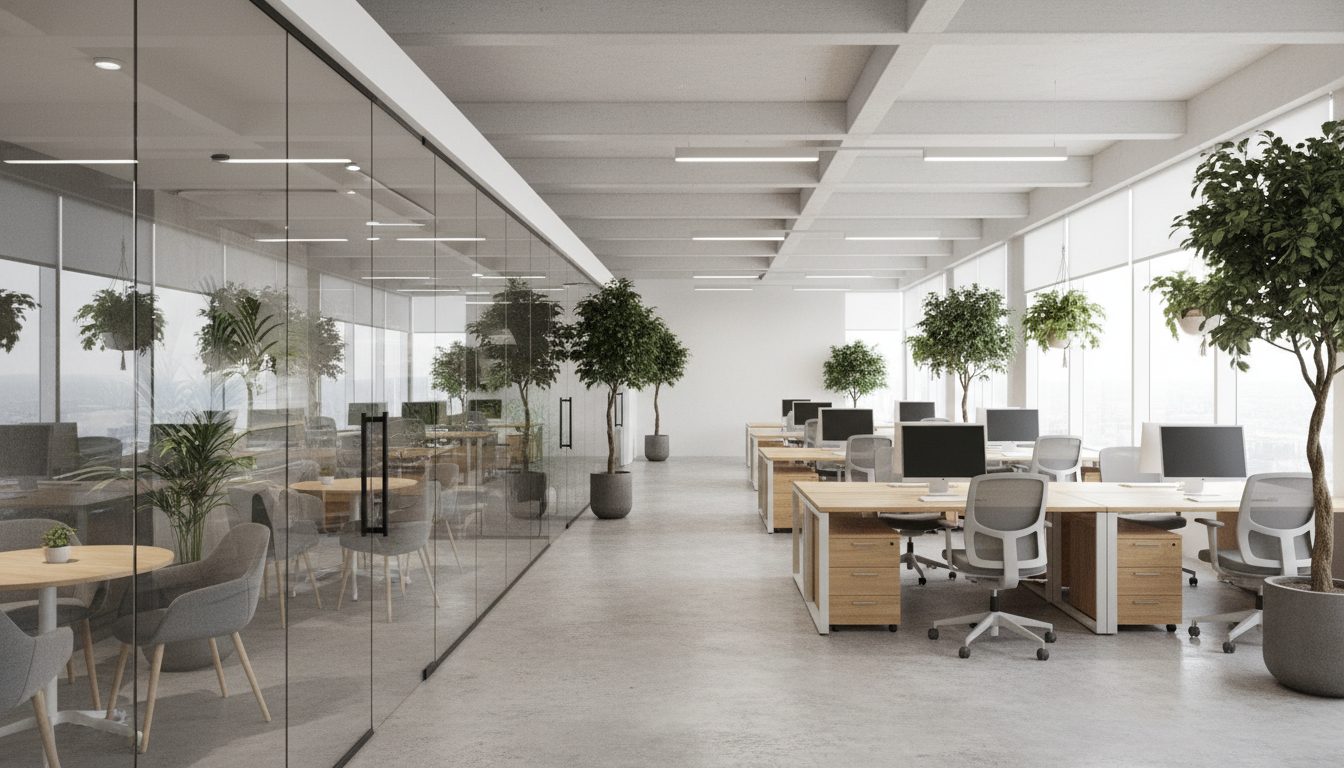
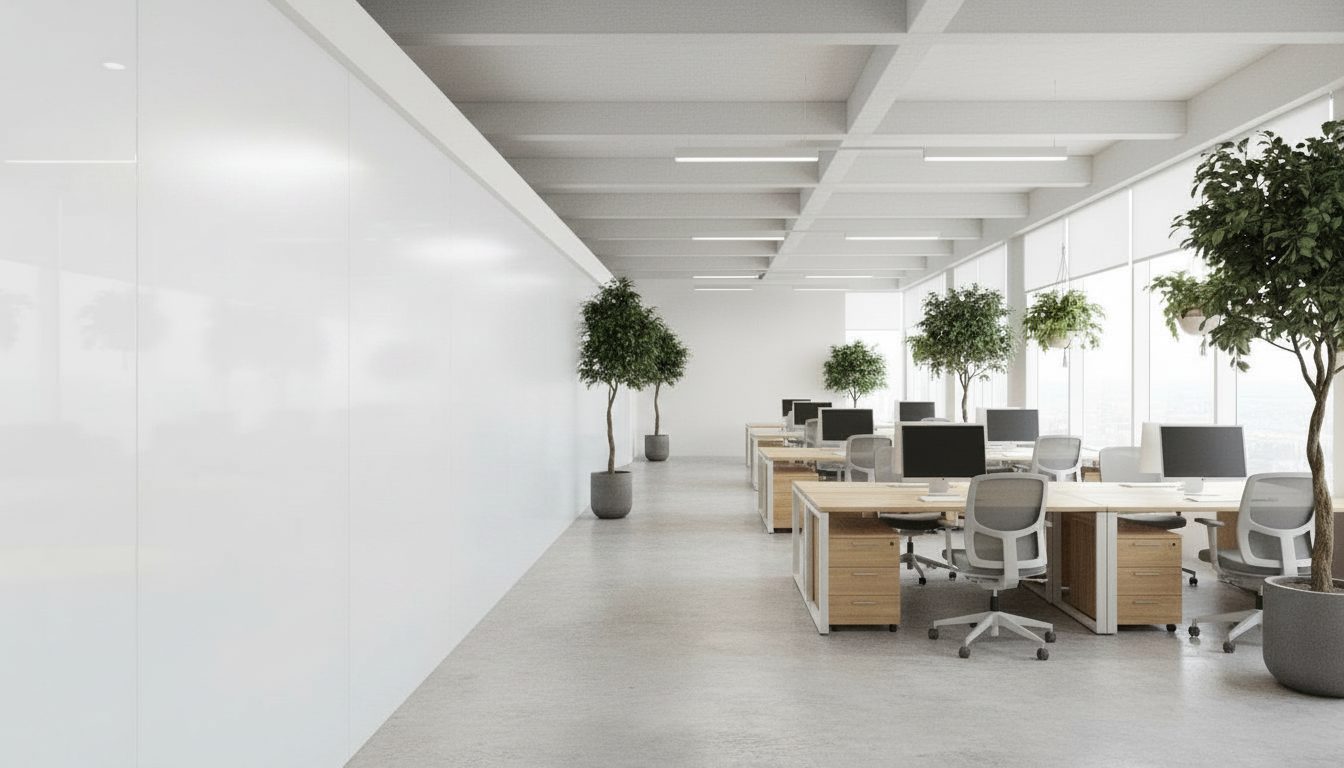
Open-plan offices are designed to feel open — full stop. But every open floor still needs a handful of moments that aren't open: a confidential call, an interview, a focus sprint nobody wants interrupted. The default fix is a blind, and blinds are the wrong answer in a glass-walled pod — they collect dust, jam in their tracks, and visually clutter a wall that was supposed to read as clean glass. A PDLC-fitted pod stays glass when it's not in use and turns opaque only when someone actually needs it to.
Beyond the manual switch
The nicer version of this isn't even a manual switch. Wire the pod's control relay into your room-booking system and the glass can frost itself the moment a booking starts — which doubles as a passive occupancy signal walking the floor: frosted reads as "in use" the way a red light does, cutting down on people yanking the door open mid-call. It's a small integration, but it changes how the pod behaves from "something you remember to operate" to "something that just works."
Sizing and build
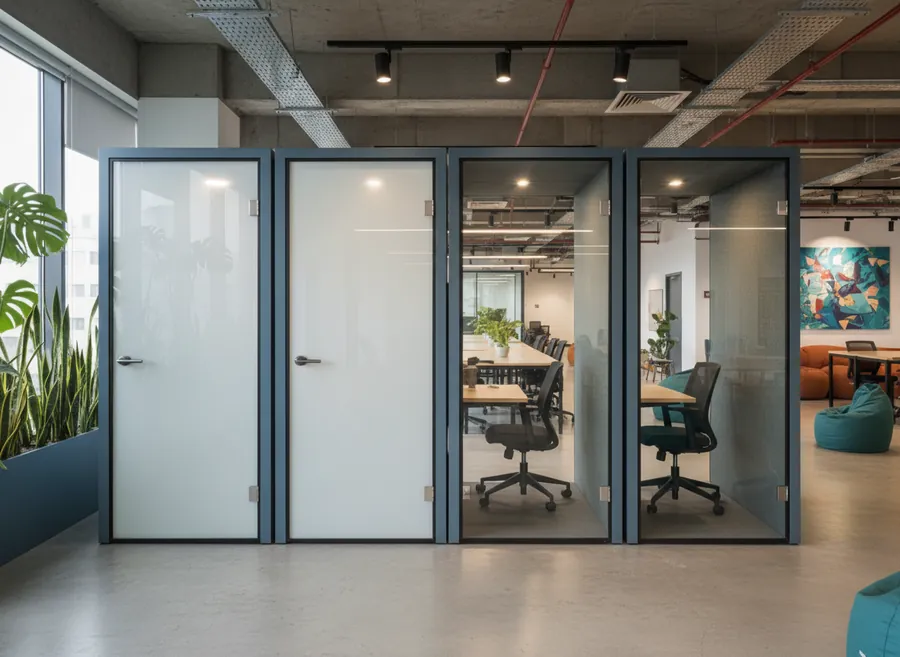
Pod glazing is usually floor-to-ceiling on two or three sides, built from roughly 10–12mm laminated glass with the PDLC interlayer specified at fabrication for new-build pods, or retrofit film applied to existing partition glass for a fit-out. Retrofit wiring runs in a slim surface-mounted channel along the base track if there's no existing conduit run — we design that channel to disappear into the pod's frame line rather than sit as an obvious add-on. We used exactly this approach across the co-working pods shown here.
The ₹ case over time
Fabric blinds need replacing, cleaning and repairing on a recurring basis — a real, ongoing line item most facilities budgets underestimate. A PDLC pod wall is a one-time install with no consumable parts and a materially better hygiene profile — no fabric for dust or allergens to sit in, which operators running dense floors care about more than they used to post-2020.
Office Pod — Typical Spec
Budget per pod, not per square foot alone — a standard two-person pod (roughly 70–90 sq ft of glazing) typically lands in the ₹1.2–2 lakh range fully installed and wired, before any booking-system integration.
Across a floor of eight or ten pods, that one-time cost usually undercuts three to five years of blind maintenance, and the glass never looks tired the way fabric does. Specify the film into new pods at fabrication if you can — it's cheaper and cleaner than retrofitting after the fact.